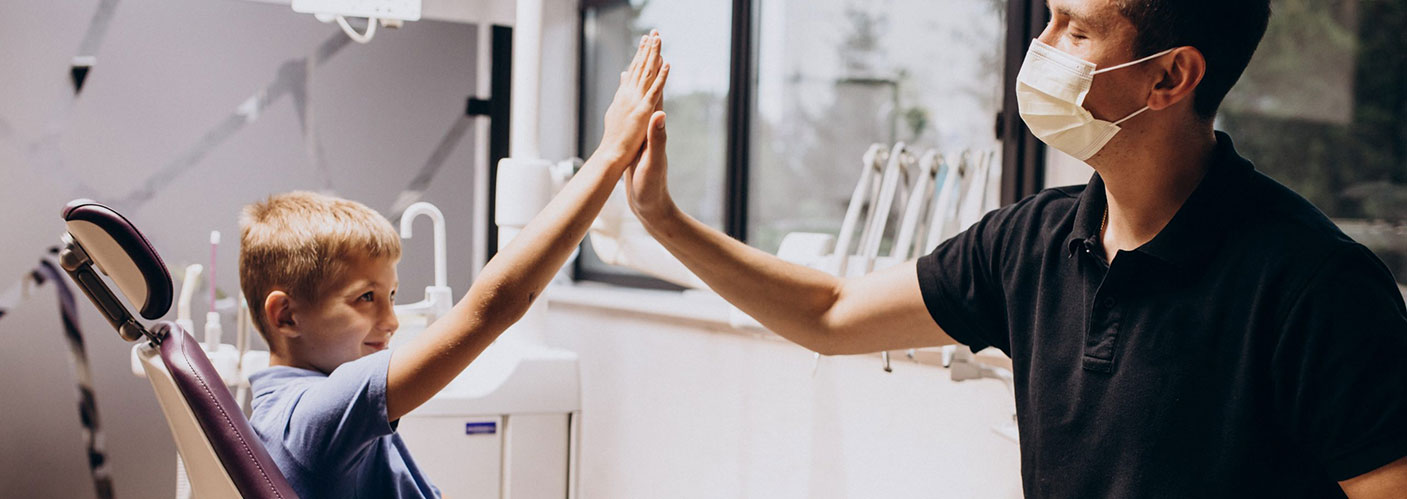
Minimally invasive dentistry is a branch of dentistry that seeks to conserve original healthy tooth tissue while proffering solutions. Treating dental caries in children via a traditional approach may be a source of anxiety for children. It may also be discomforting with a lengthy recovery period. However, incorporating minimally invasive techniques minimizes the impact that dental procedures may have on the child’s body. This also allows for a quick recovery. In recent years, the concept of minimal invasive dentistry has become central to modern pediatric dental care.
What is minimally invasive dentistry?
Minimally invasive dentistry (MID) is a field of dentistry that deals with the application of respect for original teeth tissue and structure. In essence, the philosophy of dentistry that is minimal and invasive aims to preserve as much natural tooth as possible. It deals with the prevention, remineralization, and minimal dentist intervention. The dentist specifically majors in treating tooth caries at the microscopic level. Moreover, they ensure there is no spread of infection to the surrounding tooth.
Minimally invasive dentistry is recommended for some pediatric patients (depending on their caries risk assessment profile) as they are painless. Notably, they are not as discomforting as traditional drilling, and requires minimal invasion. They also bring less anxiety to children and less worry to their parents. This highlights how the minimal invasive dentistry approach improves the overall dental experience for young patients.
Minimally invasive restorative procedures
Several minimal invasive technologies suit young children who can’t go through the hassle of tooth drilling. These approaches reflect the philosophy behind minimal invasive dentistry, focusing on comfort and tissue preservation.
1. Dental lasers
Lasers are a common technique for the restoration of decayed teeth. Techniques behind the use of lasers in dentistry are closely tied to minimal invasive treatment goals. They are precise, only affecting their target for swift tooth removal and leaving the secondary enamel or dentine in place. Aside from cavities, dental lasers are also used for carrying out minimally invasive surgeries on the soft tissues of the mouth.
The precision they have in removing only the necessary amount of tissue allows for minimal bleeding, post-operative pain or swelling, and a fast healing process.
2. Air abrasion
For tooth removal, air abrasion is a more effective alternative to a dental drill. Utilizing minimal invasive dentistry techniques, this method removes a small amount of tooth structure. It works by a direct hit of abrasive aluminum oxide particles, which are generated from compressed air or Helium gas.
This is a highly recommended procedure as it doesn’t require local anesthesia and doesn’t produce heat which has the likelihood of damaging dental pulp. In general, this method doesn’t harm healthy tooth surface or affects nearby tooth. This demonstrates the principles of dentistry with a minimal invasive focus.
3. Silver Modified Atraumatic Restorative Technique (SMART)
This technique combines two techniques, the use of silver diamine fluoride and glass ionomer composite, to stop the progression of a cavity in a three-step treatment process. The SMART approach fits within the spectrum of dentistry that is minimal in its invasive processes. It prioritizes tooth conservation.
- Silver Diamine Fluoride (SDF) Application: SDF is a clear liquid usually brushed on the surface of a tooth that shows signs of small or moderately sized cavities. On application, it hardens the tooth surface and stops the cavity from growing.
- Glass Ionomer Restoration (GIR): A glass filling material is used to fill the tooth. It acts as a sealant and prevents food and bacteria from attacking the tooth. It also masks the black stain caused by SDF application.
- Follow-up visits to the dentist at scheduled intervals. These visits reinforce the effectiveness of minimal invasive dentistry for children.
4. Hall Crowns Placement Technique
This minimally invasive technique involves cleaning the tooth and getting custom stainless steel crowns cemented on the tooth to protect it from further damage. Hall crowns are a prime example of minimal invasive dentistry. Notably, unlike traditional crowns, it’s faster and requires no anesthesia or drilling.
5. ICON
ICON is a restorative treatment for white spot lesions (WSLs) and general stains. It is the perfect option for pediatric patients, is less expensive, and is less invasive than veneers or fillings. The ICON procedure also embodies the philosophy of dentistry that is minimal and invasive by preserving healthy teeth structure. Furthermore, lesions infiltrated by ICON usually take on the appearance of nearby healthy teeth.
All of these techniques are highly effective without the need for intrusive treatments. Dr O and the team at Children’s Dentistry of Arlington have successfully mastered them and all that they entail. In summary, minimal invasive dentistry makes the treatment of dental health issues a simple and gentle process for young patients with these advanced procedures.